Iran at a Breaking Point: Bloody Crackdown and Digital Silence as Death Toll Surpasses 500

Iran at a Breaking Point: Bloody Crackdown and Digital Silence as Death Toll Surpasses 500

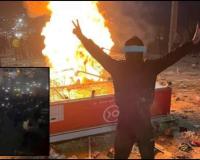
Iran is engulfed in a deadly crisis as the death toll from nationwide anti-government protests surpasses 538. Under a total internet blackout, security forces are accused of brutal crackdowns in Tehran and beyond. With President Trump backing the protestors and Tehran blaming foreign conspiracies, the Islamic Republic faces its most significant challenge in decades. Read the full report on the escalating violence.

The Islamic Republic of Iran is currently grappling with a wave of civil unrest that has rapidly escalated from localized economic grievances into a full-scale existential challenge to the clerical establishment. What began in late December as a desperate outcry against skyrocketing inflation and the precipitous collapse of the rial has transformed into a nationwide uprising, met by a state response of unprecedented lethality. As of today, the confirmed death toll has climbed to 538, according to data compiled by the Human Rights Activists News Agency (HRANA). This figure includes 490 civilians and 48 security personnel, highlighting the increasingly violent nature of the confrontations currently paralyzing major urban centers from Tehran to Mashhad.

The Iranian government’s strategy to contain the dissent has combined kinetic force with a total information vacuum. NetBlocks has confirmed a nationwide "internet blackout," a tactic designed to throttle the coordination of protests and prevent visual evidence of state violence from reaching the international community. Despite this digital curtain, harrowing accounts and leaked footage from the Kahrizak forensic center in Tehran suggest a humanitarian crisis of staggering proportions, with witnesses describing morgues overwhelmed by the influx of casualties. The crackdown has reportedly extended even into the sanctity of medical facilities; Amnesty International has issued a formal condemnation following reports of security forces storming the Imam Khomeini Hospital in Ilam, where medical staff were allegedly assaulted while attempting to treat wounded demonstrators.

The political rhetoric surrounding the crisis has taken on an increasingly bellicose tone, both domestically and abroad. President Masoud Pezeshkian has dismissed the movement as a "foreign conspiracy," characterizing the protestors as "armed terrorists" intent on destroying public property and religious institutions. This sentiment was echoed by national security official Ali Larijani, who drew parallels between the demonstrators and extremist groups like ISIS to justify the use of heavy-handed force. Meanwhile, Parliament Speaker Mohammad Bagher Ghalibaf has shifted the focus toward external adversaries, warning that any military intervention by the United States or Israel would result in immediate retaliatory strikes against their regional assets.

In the international arena, the uprising has reignited dormant geopolitical tensions. U.S. President Donald Trump has publicly signaled his administration’s support for the movement, stating that Iran is "looking toward freedom" and that the United States stands ready to provide assistance—a stance that has further emboldened the Iranian leadership’s narrative of Western meddling. From the Vatican, Pope Leo XIV has issued a plea for de-escalation, expressing profound grief over the mounting loss of life. From exile, Crown Prince Reza Pahlavi has urged the Iranian security forces to defect and protect the citizenry rather than the state. As gunfire continues to echo through the streets of Tehran under the cover of the blackout, the current unrest represents more than a temporary lapse in order; it is a pivotal moment in Iranian history that may fundamentally redefine the relationship between the theocracy and its people.

Read More Israeli Airstrikes Devastate Industrial Hub in Southern Lebanon's Ghaziyeh

About The Author

Post Comment

Comment List

Latest News

In Gujarat’s Vadnagar, a special plantation drive to increase green cover In Gujarat’s Vadnagar, a special plantation drive to increase green cover
Gandhinagar: The Gujarat government is working extensively to expand the green cover and revitalise the natural ecosystem. Extensive plantation drive...
International Kite Festival: Kite flyers from across the globe mesmerise audience in Vadodara
Adani Energy Solutions bags Rs 18,000 crore project in Q3 FY26, expands transmission network

Live Cricket Score

Advertisement

Science & Tech

Tata Motors Sets New Segment Benchmark with the Launch of the 2026 Punch Facelift Tata Motors Sets New Segment Benchmark with the Launch of the 2026 Punch Facelift
Tata Motors launches the 2026 Punch facelift in India starting at ₹5.59 lakh. Featuring a new 120PS turbo-petrol engine, 10.25-inch...
ISRO’s Maiden 2026 Mission Faces Crisis as PSLV-C62 Veers Off Course, Threatening Vital Defense and AI Assets

Health

Coffee-Based Home Remedies Gain Ground as Dermatologists Highlight Natural Skincare Benefits Coffee-Based Home Remedies Gain Ground as Dermatologists Highlight Natural Skincare Benefits
A growing number of dermatologists are endorsing coffee-based home remedies as natural, affordable alternatives to commercial skincare. From face scrubs...
Moringa’s Rise as a Global Superfood Gains Momentum Amid New Research

Lifestyle

Cost of home-cooked veg, non-veg thalis falls 13 pc in November due to ease in input prices Cost of home-cooked veg, non-veg thalis falls 13 pc in November due to ease in input prices
The cost of preparing both vegetarian and non‑vegetarian thalis at home fell 13 per cent year‑on‑year in November, driven mainly...
10 budget honeymoon destinations for the newlyweds in India
crossorigin="anonymous">